


Have you ever thought that going green could boost your restaurant's profits? A green menu does more than save the planet. It cuts costs by slashing utility bills and reducing waste. Plus, customers love a dining spot that cares about the environment.
Upgrading your gear and choosing water-saving tools can lead to long-term savings. Simple changes today can pave the way for a stronger reputation in your neighborhood. In the end, thoughtful choices in the kitchen build lasting ties with your community.
Key Advantages of Sustainable Menu Adoption in Restaurants
Restaurants that choose sustainable menus lower energy use, cut costs, and build stronger bonds with their communities while easing their impact on nature. Simple changes in cooking, lighting, and climate control help reduce energy use and lower bills. Using water-saving tools like low-flow faucets and smart dishwashing cycles saves water and money. Efforts like composting, recycling, and adjusting portion sizes further reduce waste and contribute to savings.
Going green with a menu does more than just save money. It builds a restaurant’s reputation with eco-friendly diners who appreciate social responsibility and local support. Lower costs paired with a stronger brand image give these restaurants a clear edge in a competitive market.
Here are seven high-impact advantages:
- Lower utility bills thanks to energy-smart practices.
- Reduced spending on operations with efficient waste handling.
- More loyal customers who value eco-friendly practices.
- Fewer greenhouse gas emissions, which shrink the restaurant's carbon footprint.
- Better water conservation using innovative technology.
- Increased community support by sourcing ingredients locally and ethically.
- A boosted reputation through steady, responsible practices.
This all-around sustainable approach cuts costs and makes a restaurant run smoother. It can boost long-term profits, create a more enjoyable dining experience, and deliver tangible environmental benefits that today's eco-conscious diners appreciate.
Environmental Impact Minimization with Sustainable Menus

A recent survey by the Sustainable Restaurant Council shows that when restaurants update old cooking tools with energy-efficient equipment and use LED lighting, they save on energy costs, often around 18%. East Coast Bistro, for instance, cut its monthly utility bills by 22% after upgrading its HVAC system. One surprising example even showed a nearly 20% drop in greenhouse gas emissions just by switching to efficient lighting and fine-tuned climate controls.
Simple changes like installing low-flow faucets and fine-tuning dishwashing cycles can also make a big difference. EcoKitchen Solutions found that water use dropped by 30% after adding water-saving fixtures. In one local café, repurposing greywater from dishwashing to flush restrooms helped trim overall water consumption.
Restaurants are also rethinking their waste management. Structured composting and strict portion control have led to more than a 35% reduction in landfill waste at several establishments. A study by Green Plate Ventures even noted that waste disposal costs dropped by 28% thanks to these changes.
| Measure | Case Study Impact |
|---|---|
| Energy Equipment Upgrade | 18-22% cost drop |
| Water Conservation | 30% usage reduction |
| Waste Management | 35% landfill diversion |
Economic Benefits and Cost Efficiency of Sustainable Menus
Restaurants with sustainable menus see solid financial benefits. Upgrading to energy-efficient appliances and water-saving fixtures can lower monthly bills significantly. Studies show that many spots cut energy bills by 10-15% and waste fees by about 8%. Plus, these smart investments not only boost the dining experience but also help pay for themselves in just 12-18 months.
Buying seasonal and local produce in bulk saves money and brings fresher ingredients to the table. This strategy makes the supply chain more predictable and lowers overall food costs. By designing menus around available produce, restaurants can negotiate better deals with local suppliers and depend less on expensive imports.
Sustainable practices also make waste management easier and cut costs even more. Tactics like precise portion control and strong recycling programs help reduce waste fees, which in turn improves profit margins. Often, the savings from these efforts are reinvested in technology upgrades, better services, or new sustainable innovations.
- Reduced energy bills by 10-15%
- Lower waste fees by about 8%
- Savings from bulk buying seasonal, local produce
- Payback on efficient upgrades within 12-18 months
Sustainable methods bring long-term gains by blending eco-friendly actions with smart cost-saving strategies.
Enhancing Brand Image and Customer Engagement with Sustainable Menus
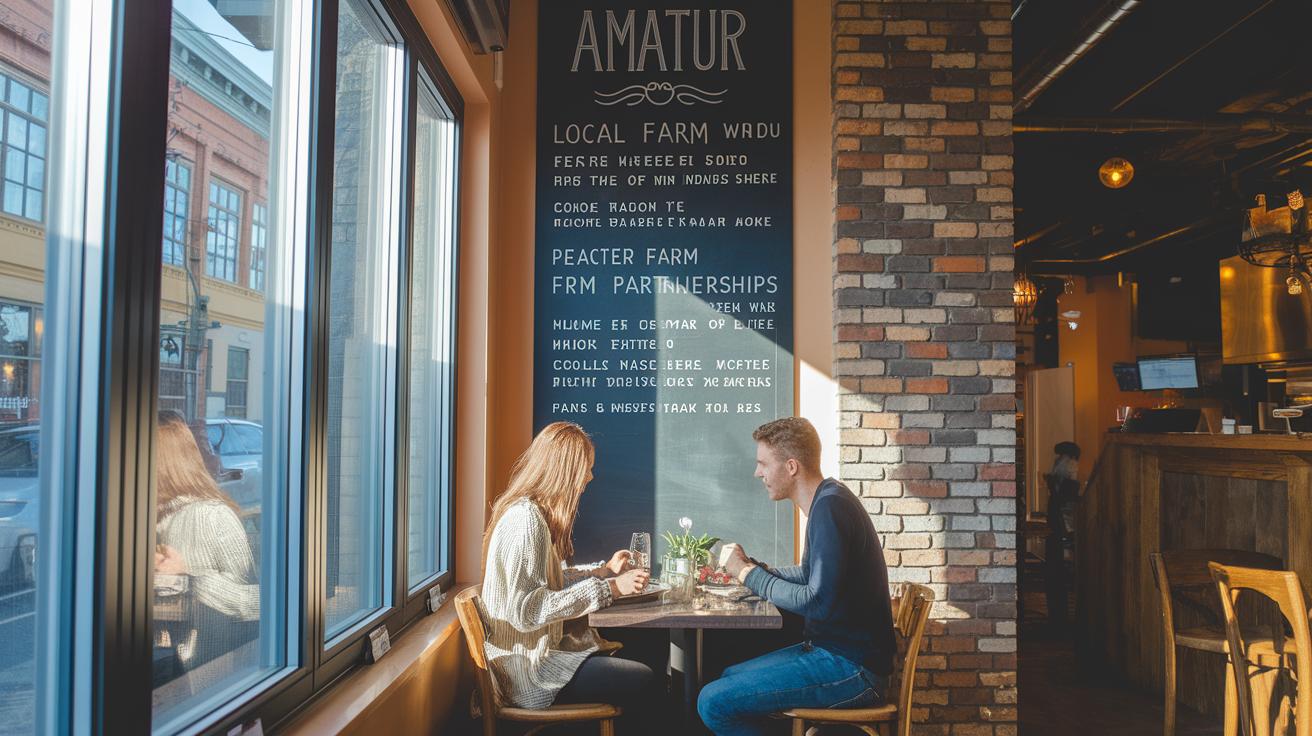
Sustainable menus are changing the dining scene. They boost a restaurant's reputation and keep customers coming back. When menus show local ingredients and waste cuts, surveys report a 30% jump in return visits. One small bistro, for example, saw more steady guests simply by highlighting its eco-friendly practices.
Customers love a clear story about where their food comes from. Listing local sources and real farm partnerships builds trust and earns positive press. Restaurants that share these details show they truly care about doing things right. This honest approach not only upgrades their brand image but also sets them apart as leaders in food sustainability. Awards like the Michelin Guide’s Green Stars in the UK spotlight those that go the extra mile.
Restaurants that embrace these values foster a closer bond with their communities. They share stories about working with local farmers and supporting regional food networks. This approach helps diners feel connected and responsible for both their meals and their community. Food sustainability becomes a key ingredient in creating a fresh, engaging dining experience.
Implementation Strategies for Effective Sustainable Menu Integration
Partner with local farms to secure seasonal and certified organic ingredients. Building relationships with nearby growers helps you get fresh produce at its peak. This approach supports community farms and makes your dishes reflect a farm-to-fork journey.
Design your menu around seasonal ingredients so that each dish bursts with natural flavor and nutrition. Adjust your offerings with the harvest, balancing creative recipes with healthy options. This strategy simplifies sourcing while honoring the rhythms of local agriculture.
Train your team on new sustainable practices by teaching energy-saving cooking methods and waste-reduction steps. Small changes like using eco-friendly appliances and clear recycling procedures boost overall efficiency. When every team member, front-of-house and in the kitchen, is on board, the shift toward sustainability becomes smooth and practical.
Final Words
in the action, our exploration highlighted how sustainable menus can cut costs, brighten a brand’s image, and reduce the restaurant’s environmental impact. The discussion covered economic savings, environmental wins, customer appeal, and practical steps for change.
Key advantages include:
- lower utility bills
- stronger brand loyalty
- waste reduction savings
- community support
- carbon footprint mitigation
- enhanced reputation
- improved resource use
These benefits of adopting a sustainable menu in restaurants pave the way for a brighter, more efficient future.
FAQ
What are the benefits of adopting a sustainable menu in restaurants?
The benefits of adopting a sustainable menu in restaurants include lower utility bills, waste reduction, improved resource use, enhanced reputation, and stronger customer and community loyalty through locally sourced, eco-friendly ingredients.
What are some sustainable menu ideas?
The sustainable menu ideas promote using seasonal and local produce, plant-forward recipes, and portion control methods, all aimed at reducing waste and lowering operating costs while delighting diners with fresh flavors.
What are Menus of Change Principles?
The Menus of Change principles guide restaurants to use regional, seasonal ingredients, reduce waste through recycling and portion management, and source ethically to support local economies and the environment.
Can you share restaurant sustainability examples?
The restaurant sustainability examples include installing energy-efficient lighting, using water-saving devices, implementing waste reduction programs, and sourcing ingredients directly from nearby farms to lower environmental impacts.
Why is sustainability important in restaurants?
The importance of sustainability in restaurants is seen in reduced environmental impact, lower operating expenses, support for community farmers, and increased appeal to diners who value ethical and eco-friendly practices.
What are the benefits of sustainable food choices?
The benefits of sustainable food choices include better health outcomes, cost savings, reduced environmental footprint through less waste and energy use, and supportive local food systems that boost community resilience.
What is a disadvantage for a restaurant wishing to adopt sustainable practices?
The disadvantage for a restaurant wishing to adopt sustainable practices is often the higher initial investment required for energy-efficient equipment and sourcing local, organic ingredients, which can present short-term financial challenges.
What are three principles of a sustainable menu?
The three principles of a sustainable menu involve emphasizing local, seasonal ingredients, strict waste reduction through efficient portioning and recycling, and ensuring ethical sourcing that supports social and environmental responsibility.