


Have you ever wondered if your restaurant's menu could help the earth while boosting your profits? A green, fresh menu can cut waste and attract diners who care about the planet. Using local, seasonal ingredients and watching portion sizes not only adds great flavor but also lowers shipping costs. Here are three easy tips to make your menu stand out with smart, responsible charm. These ideas blend style with sustainability to create a dining experience that benefits both your business and your community.
3 eco-friendly restaurant menu design tips: Pure green
Creating a green menu not only cuts waste; it can also boost profits. Updating your traditional menu with eco-friendly ideas meets the needs of diners who care about the planet, all while reducing costs. One smart move is to use seasonal, locally grown ingredients. Choosing produce at its peak from nearby markets or urban farms means less long-distance travel. This fresh approach gives your menu an authentic, vibrant feel. For example, imagine starting with a fun fact: "Local tomatoes, picked at their prime, burst with flavor that outshines out-of-season ones."
Another great tip is to manage portions wisely and use the same ingredients in several dishes. Serving smaller, balanced portions can help cut food waste. Plus, reusing ingredients in different recipes keeps costs low and flavors consistent. Following clear principles of restaurant menu design can make this process easier.
A third idea is to create items in-house. Setting up a small garden or making your own salad dressings and pickled vegetables gives you full control over the freshness and waste. This hands-on approach boosts flavor and shows your commitment to sustainability.
- Emphasize seasonal, local produce
- Standardize portions with overlapping ingredients
- Adopt in-house production methods
These tips blend smart business practices with responsible sourcing to make every dish a step toward greener dining.
Local & Seasonal Sourcing Tips for Eco-Friendly Menu Design

Restaurants can cut down on emissions and help local communities by choosing ingredients grown close to home. Fresh produce from farmers' markets or community gardens offers the best flavors and textures while lowering the need for long-haul transport. This shift not only boosts taste in each dish but also reduces the environmental strain that comes with shipping food far distances. Choosing organic ingredients builds a tighter bond with eco-friendly farms and practices. For more tips on picking organic ingredients, check out resources like Sustainable sourcing (https://matpple.com?p=269).
Restaurants might also look at buying in bulk to lower packaging waste. Growing herbs or vegetables on site can keep dishes extra fresh and full of flavor. Teaming up with local farms or urban growers further shows a strong commitment to farm-to-table cooking. These simple changes create a clever kitchen setup that gives diners a memorable experience with a green twist.
- Source ingredients from nearby farmers' markets and community gardens
- Refresh menus with the best seasonal produce
- Choose organic, eco-friendly products
- Purchase in bulk to lessen packaging waste
- Grow your own herbs and veggies for unmatched freshness
- Collaborate with local farms or urban growers
Eco-Friendly Materials & Printing Techniques for Menus
Restaurants looking to build a greener image can make a big impact by choosing sustainable materials for their menus. Instead of basic paper with plastic coatings, try using recycled cardstock (made from paper already used by consumers), wood pulp, or plant-based fabrics for menu covers. These options cut waste from the start and show a clear commitment to the environment.
Menus printed with soy or vegetable-based inks, which avoid heavy metals and toxic chemicals, add another layer of safety. Restaurants can also choose biodegradable laminates or skip lamination entirely to lower plastic waste. These choices help reduce a restaurant’s environmental footprint and boost its credibility with diners who care about the planet.
These eco-friendly practices blend style and function without sacrificing quality. Every detail, from the cover to the ink, plays a part in reducing environmental impact. Choosing inventive materials and print methods turns each menu into a step toward a sustainable future.
Digital & Paperless Menu Innovations for Sustainability

Digital menus mix smart design with eco-friendly practices. Restaurants now use special software that tracks ingredient costs in real time and checks how each recipe makes money. This lets chefs and managers change menu items quickly while cutting down on food waste.
QR codes and tablet ordering help reduce paper use. For example, when fresh, seasonal ingredients arrive, a restaurant can update its digital menu instantly. This way, every dish gets paired with the best produce available.
Some systems even adjust dish prices based on changing ingredient costs. These tools keep restaurants competitive and green. Instead of printing new menus every season or whenever prices change, digital menus update instantly and save paper.
Going paperless not only saves resources, it also makes running a restaurant simpler. By embracing these innovations, eateries support sustainable practices and meet the needs of eco-conscious diners.
Visual & Branding Design Principles for Green Dining Menus
Eco-friendly menu design brings a restaurant's personality together with nature. Designers choose natural images like leaves and earthy colors to spark thoughts of sustainability. For example, a menu might feature soft green leaf patterns mixed with warm browns to create a cozy, nature-inspired look.
Simple layouts are a big part of this design style. Clear fonts and plenty of white space give the menus a modern vibe and help reduce ink usage. This clean approach makes natural elements pop and keeps printing costs down.
Designers can also add organic shapes and nature-based patterns to backgrounds or borders. Using a recycled texture for the background adds a genuine touch and reminds diners that the restaurant values eco-friendly practices from the start.
Picture a menu that combines lively, eco-friendly colors with neat, uncluttered visuals. This style highlights key details like dish descriptions and prices while subtly showing the restaurant’s care for the environment. Adding soft, natural colors and hand-drawn elements can make the dining experience even more inviting.
Waste-Minimizing Menu Planning Tactics in Eco-Friendly Design
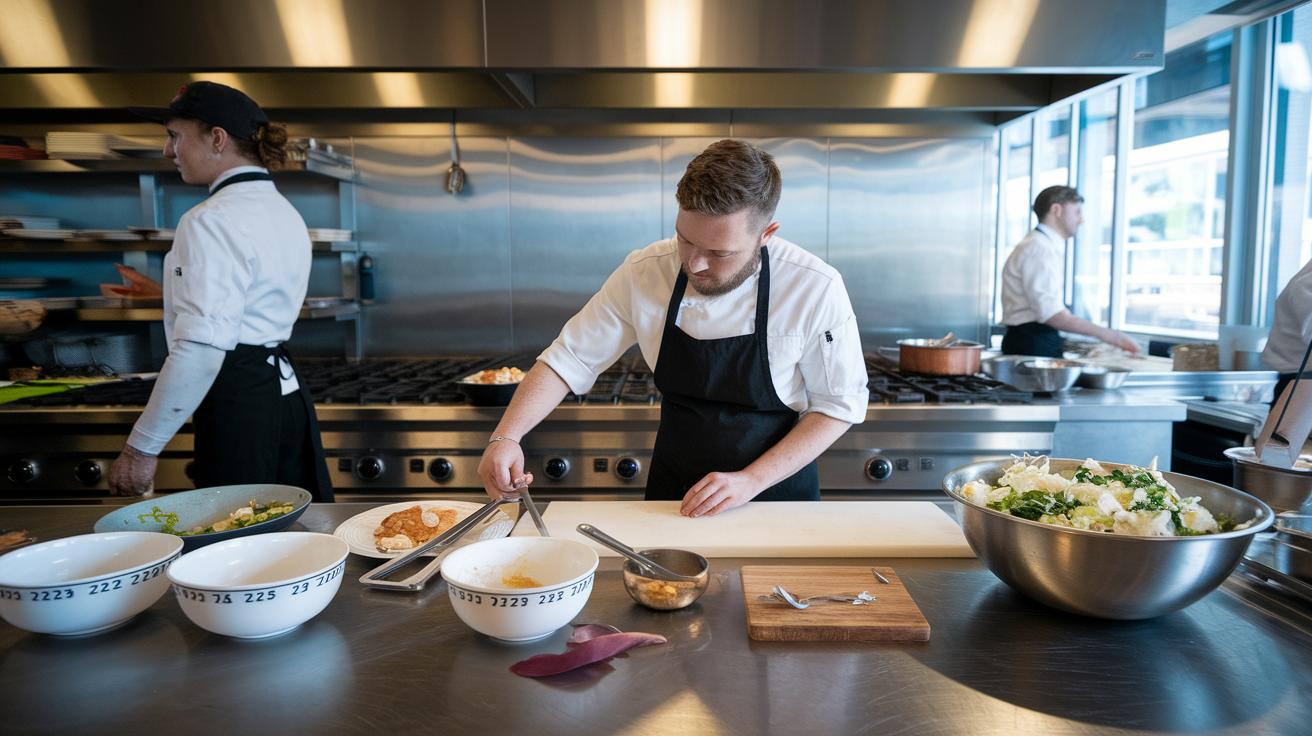
Restaurants can save money and reduce waste by rethinking how dishes are planned and served. They start with portion sizes that match demand, cutting down on extra ingredients that might otherwise go unused. A well-planned menu not only boosts profits but also lowers food waste. Chefs can transform leftover parts, like veggie peels, protein trimmings, or fruit skins, into creative specials. This approach gives diners a fresh twist on familiar flavors and keeps the kitchen running more smoothly by sticking to sustainable choices.
Here are five practical tactics:
- Use consistent portion sizes for every dish.
- Repurpose vegetables and protein trimmings into new offerings.
- Limit protein servings to about 3 ounces.
- Focus the menu on core, sustainable items.
- Offer more plant-based options to lower your ecological footprint.
These steps help control costs, make better use of ingredients, and emphasize a plant-forward style that appeals to eco-conscious diners.
Case Study: Flavorfulz’s Sustainable Menu Solutions
Flavorfulz has turned eco-friendly menu design on its head. Their smart platform helps restaurants cut down on waste and connect better with diners. Early users experienced a 15% drop in food waste and a 10% boost in customer engagement. The system keeps track of ingredients in real time, letting kitchens adjust their recipes with each fresh delivery.
The platform also offers training for staff on proper portion sizes and eco-friendly plating techniques. With these clear steps, teams can serve consistent portions and turn extra ingredients into creative dishes. One chef noted, "We cut down on food waste while delighting our customers with inventive specials made from what used to be leftovers."
Key benefits include:
- Real-time tracking of ingredient usage
- Digital updates that match seasonal produce
- Training to ensure precise portion control
This clever, data-driven solution helps restaurants adopt sustainable practices and establish themselves as green leaders. It drives both smoother operations and stronger customer loyalty.
Final Words
In the action, the article outlined practical strategies for a sustainable menu that not only cuts waste but also boosts profits. We explored seasonal and local sourcing, smart material choices in printing, digital innovations, and creative design ideas that blend style with sustainability.
The case study on Flavorfulz showed real-life successes using eco-friendly restaurant menu design tips. Strive to make each choice count and brighten your business outlook for a greener future.
FAQ
What do eco friendly restaurant menu design tips PDF offer?
Eco friendly restaurant menu design tips PDF provide clear guidelines on using seasonal ingredients, reducing waste, and selecting eco-friendly materials, helping restaurants boost profitability while appealing to eco-conscious diners.
What do sustainable menu ideas focus on?
Sustainable menu ideas concentrate on using local, seasonal produce, minimizing food waste, and employing green printing techniques, ensuring a fresh, responsible dining experience for customers.
How do eco friendly restaurant menu design tips 2021 differ from past approaches?
Eco friendly restaurant menu design tips 2021 incorporate updated practices like digital menus, dynamic pricing, and ingredient tracking for real-time cost management, reflecting modern green trends.
What is sustainable menu design?
Sustainable menu design combines ethical sourcing, eco-friendly materials, and waste-minimizing tactics to enhance environmental impact, streamline operations, and promote a responsible dining experience.
What are the Menus of Change Principles?
Menus of Change Principles emphasize green practices by guiding sustainable sourcing, waste reduction strategies, and eco-friendly printing methods that support a restaurant’s commitment to the environment.
What do Menus of Change recipes encourage?
Menus of Change recipes encourage the use of seasonal produce and thoughtfully sized portions, blending flavor with sustainability and reducing kitchen waste.
How does sustainable food influence restaurant menus?
Sustainable food highlights local sourcing and seasonal variety, allowing menus to offer fresher, environmentally responsible dishes that appeal to diners mindful of their food’s impact.
What is the role of the Menus of Change Business Leadership Council?
The Menus of Change Business Leadership Council assists restaurants in adopting sustainable practices by providing guidelines for sourcing, waste reduction, and eco-friendly menu management.